I’m slowly working my way through the personal finance, business, & psychology sections so you don’t have to. Here’s my thoughts on what I’ve read so far.
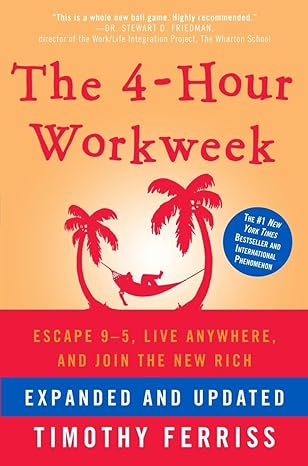
I had so many thoughts on this one, I wrote a whole review post about it!
I recently read The 4-Hour Workweek by Timothy Ferris. Originally published in 2007, he republished a “not revised” but expanded and updated version in 2009 because he thought the world had changed so much between 2007 and 2009 after the banking crash of 2008. I’ve read the book 15 years later, in 2024, and it is very funny to see how he couldn’t even imagine how much the world would actually change. What’s fascinating is the ideas he proposes and how they vary in the world of smartphones and cloud computing.
Continue Reading … Remote Work – Then and Now
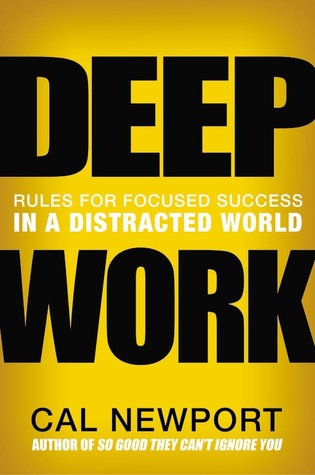
Cal Newport’s Deep Work is one of my favorite recent reads. His arguments for deep work as valuable, rare, and meaningful hit home in the midst of a pandemic, where I’ve spent two years taking video calls form home, have slack on my phone in case I’m in the other room, and still have to find time to do, well, deep work.
Newport’s thoroughly researched advice might changed the world if we could all figure out how to implement it.

I read Lean In back in 2015, against my own intentions. This is the review I wrote on my Goodreads at the time, and I couldn’t have said it better myself: I wasn’t going to read this book. I heard it had a feminist backlash and didn’t want to waste my time. Then, I started hearing good things about the book. I watched the author’s TED talk and decided this woman had experience I could learn from.
A fellow feminist friend, while admitting she hadn’t read the book, said she felt the idea of the book took too much of the blame off of structural, systematic issues and instead blamed women. Sandberg address this very accusation in the introduction. She says
“I was told over and over about inequalities in the workplace and how hard it would be to have a career and a family. I rarely heard anything, however, about the ways I might hold myself back. These internal obstacles deserve a lot more attention, in part because they are under our own control. we can dismantle the hurdles in ourselves today. We can start this very moment.”
Yes, it would be ideal to for us to have equality in the workplace. But isn’t it worth the time to get advice on how to help ourselves before we get there?
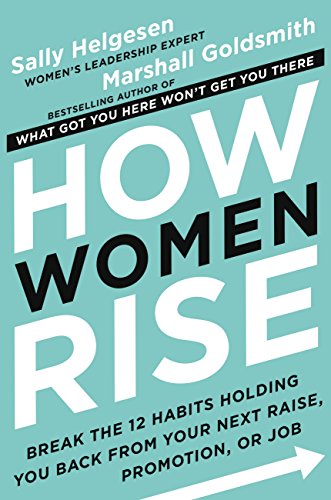
I read How Women Rise, a collaboration between Sally Helgesen and Marshall Goldsmith, as a book club pick for a women’s group at my work. I hurriedly skimmed through it in time for the meeting, and didn’t find much I hadn’t known before. However, in going back and taking the time to really delve into and reflect on each of the 12 habits, I found there was advice I could glean from this easily digestible guide.
I’m curious to read Marshall Goldsmith’s original work, What Got You Here Won’t Get You There, and see how it has aged.
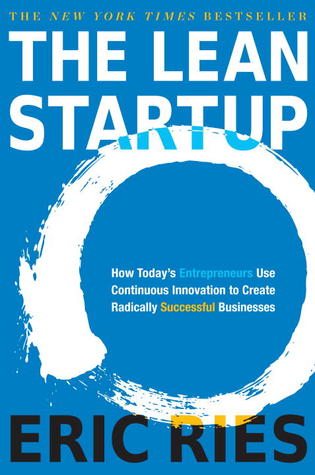
I was very excited to read Eric Reis’s The Lean Startup but found it disappointing. Towards the end of the book, Ries mentions that eventually even the most radical ideas become status quo. I think that is what has happened even between 2011 when the book was published, and today’s start-up world of 2020. I found the book boring because there wasn’t really any new information.
Also, as “the book” on startups, it is solely focused on product development and problem solving. Those look for a how-to on starting a start-up, particularly for information on fundraising or working with venture capital, would best spend their time reading something else.
I recently read Robert Reich’s Saving Capitalism. I did not like this book. I purchased it hoping for economic arguments outlining the benefits of capitalism. Instead, Reich’s basic premise is that the classic debate between the free market and government regulation is a irrelevant because the government and those in power define the market. Reich uses this definition to spend the whole book campaigning for “socialist” political policies. My offense isn’t with the content of these arguments, but rather with the character, the emotional nature of how Reich ties together unrelated facts. Overall I found the book extremely difficult to finish and lacking in academic stature.
I both love and hate Jen Sincero’s book You Are A Badass At Making Money. I think there’s value to be found in it, but caution people against taking it as financial management advice.
Pros: There is value in the idea that your thoughts define your actions. This book can help you improve your relationship with and thoughts around money.
Cons: Manifesting, or wishing money into existence in your life, is not good advice. To me, this allows people an excuse to continue mismanaging their money in the name of staying out of the way of the Universal Intelligence.
Bonus: Financial advice from goats. 🐐 Goats!
Ramit Sethi’s I Will Teach You To Be Rich offers practical, applicable advice that can help anyone improve their financial situation. Click on the cover to check out his blog of the same name.
Pros: The book poses real questions such as “Would you rather be sexy or rich?” I’ve personally used it for advice.
Cons: The book is designed as a 6-week course, but the chapters could also be used independently to address specific financial needs.
Bad With Money is based on Gaby Dunn’s podcast Bad With Money.
Pro: Gaby has a hilarious approach to examining the world of money from a place of being “bad with money”, and examines the impact of systematic structures on minority populations.
Cons: The book highly overlaps season 1 of the podcast. Also, since Gaby has no formal background in financial training, sometimes there is inaccurate or incomplete financial information. Which… frankly inspired me to write this blog! So Yay, wins for everyone.
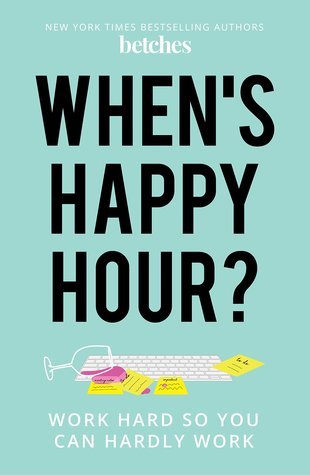
Published by Betches Media, When’s Happy Hour? offers advice to young women entering the workforce.
Pros: This book has an entertaining approach, and has some of the best advice I’ve read on making the transition from college to entering the workforce.
Cons: If you don’t like, absolutely love the Bachelor, you may miss a few references in this book. Not fit for all corporate settings.
 This Blog Is Basic