I had a goal to write one piece each month, starting with November. I had a few research topic ideas that I’m still working on (Spoiler Alert), but found myself completely distracted by the barrage of interesting business news in November. Then of course the holidays happened and now it’s halfway through January February, but here’s the best news from November.
- Elizabeth Holmes of Theranos got sentenced to 11 years in prison, and her ex-boyfriend / sugar daddy / business partner got sentenced for 13 years.
- FTX Collapse, including interviews with Alameda Researches’ CEO resurfacing where she said she doesn’t believe in “stop losses” as a way to mitigate risk. Do you know what stop losses do? They stop how much money you’re using. Her arguments on liquidity make more sense on the FTX side of running an exchange, indicating just how little these people knew about the difference between running a firm and betting $15 billion dollars.
- Everything Twitter. My poor boyfriend mentioned that the Saudis had a $1 Billion investment in Twitter before Elon bought it, and didn’t cash out. Which meant that he got to listen to me do a deep dive reading through Twitters pre-Elon financials at a bar. He wasn’t wrong.
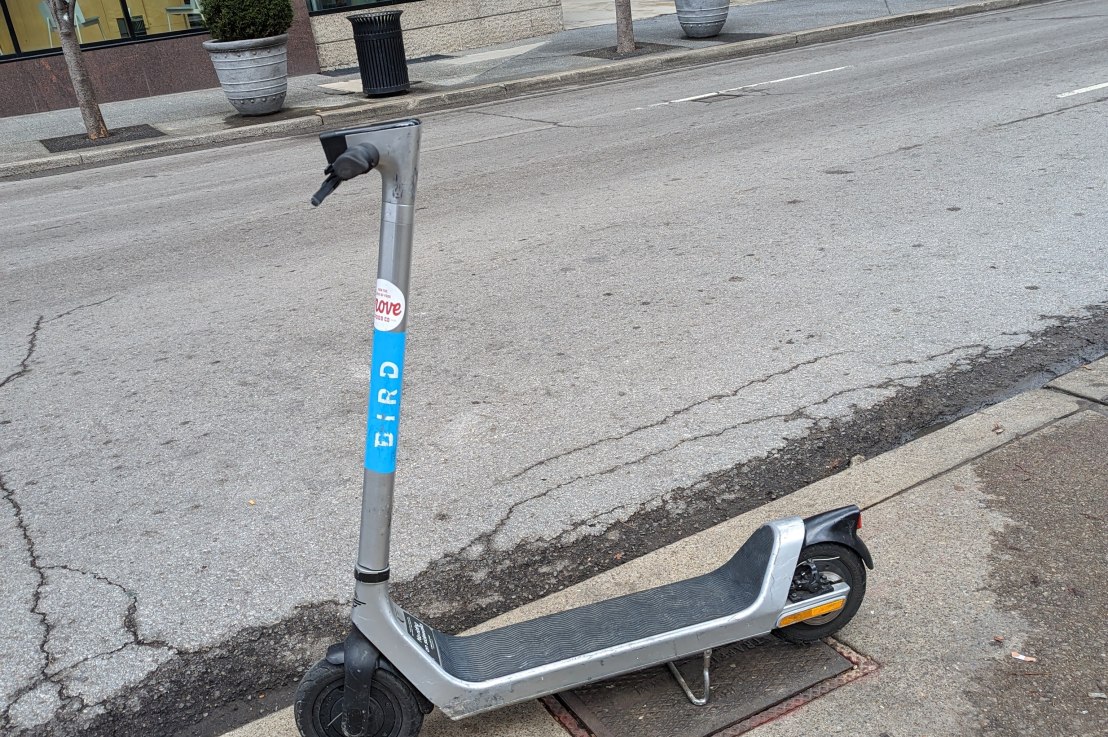
I’ve picked the most concise, and probably least covered of the rabbit holes I went down, and want to share my findings with you. That’s the collapse of former venture capital darling, Bird (BRDS), the scooter company. (The ticker BIRD was already taken by shoe company Allbirds).
I first saw the news via a TechCrunch article by Jaclyn Trop, Bird tells SEC it overstated revenue for two years. Per the TechCrunch reporting,
“Micromobility company Bird said Monday it had overstated its revenue for more than two years by recognizing unpaid customer rides.
Bird’s audit committee found on Friday that the company’s financial reports spanning the first quarter of 2020 through the second quarter of 2022 “should no longer be relied upon,” according to a U.S. Securities and Exchange Commission (SEC) filing.”
Being a former revenue specialist, I wanted to know more about how this happened. I did some digging, but no one quite explained the level of detail I wanted on what happened. So being the nerd that I am, I went and looked at the SEC financial statements. You can always find public SEC company filings for free at SEC.gov, and typically companies will have an investor relations page on their website with copies as well. The company websites are typically easier to navigate than the SEC site.
To help explain what I was looking for, I have to give you a brief overview of how revenue accounting works. The current rules for revenue accounting are called ASC 606.
In order for a company to be able to recognize revenue on a sale, the following criteria must be met under ASC 606:
- Identify the contract with a customer
- Identify the performance obligation with the customer
- Determine the transaction price
- Allocate the transaction price to the performance obligations
- Recognize the revenue when (or as) the entity satisfies a performance obligation.
If you want the 500 page textbook interpretation of the rules, I encourage you to check out the guidance issued by Delotitte or PWC. I’m kidding. Don’t do that. The people who need those textbooks already have them – people like me. I was curious which of these rules wasn’t being met correctly.
Bird filed a Form 8-K on 11/14/2022 to inform the SEC & investors of the miststatement. (They filed two 8-K’s on 11/14/2022, if you don’t see item 4.02 then look at the other document).
Item 4.02 Non-Reliance on Previously Issued Financial Statements or a Related Audit Report or Completed Interim Review.
On November 11, 2022, the Audit Committee of the Board of Directors (the “Audit Committee”) of Bird Global, Inc. (the “Company”), after discussion with management, determined that (i) the Company’s audited consolidated financial statements as of December 31, 2021 and 2020, and for the years then ended, and quarterly periods within those years, included in the Annual Report on Form 10-K filed with the Securities and Exchange Commission (the “SEC”) on March 15, 2022, (ii) its condensed consolidated financial statements as of March 31, 2022, and for the three months then ended, included in the Quarterly Report on Form 10-Q filed with the SEC on May 16, 2022 and (iii) its condensed consolidated financial statements as of June 30, 2022, and for the three and six months then ended, included in the Quarterly Report on Form 10-Q filed with the SEC on August 15, 2022 (collectively, the “Original Filings”, and each such quarterly or annual period covered therein, an “impacted period”), should no longer be relied upon.
Form 8-K
That phrase “collectability was not probable” stood out to me – hold that thought. Essentially, the company took revenue when you booked a scooter, even if your wallet balance was below $0. They assumed you’d pay them back. You didn’t. A lot of you didn’t.
ASC 606 is a relatively new standard, it went into effect for public companies for the fiscal year following December 15, 2017, which was the actual year 2018 for most humans. The former revenue accounting guidance, ASC 605 had a different set of requirements. One of which was essentially that “collectibility must be probable.” So this made me wonder, is Bird using the wrong, outdated revenue guidance? Even after their refiling? So I went digging EVEN FURTHER.
ASC 605 requires the following four criteria for revenue recognition:
- Persuasive evidence of an arrangement exists.
- Delivery has occurred or services have been performed.
- The seller’s price to the buyer is fixed and determinable.
- Collectibility is reasonably assured.
Bird filed restated thier 2021 & 2020 financial data, known as a Form 10K/A on 11/18/2022.
Revenue Recognition
For the years ended December 31, 2021, and 2020, the Company recognized revenue from rides taken by individual users of the Bird mobile application (the “Bird App”) as part of Sharing, which the Company accounts for pursuant to ASC 840, Leases. Additionally, the Company recognized revenue from Product Sales, primarily comprised of vehicles sales, pursuant to ASC 606,Revenue from Contracts with Customers. Sales taxes, including value added taxes, are excluded from reported revenue.
Sharing
The Company’s technology platform enables users to participate in the Company’s Sharing program. To use a vehicle, the user contracts with the Company via acceptance of the Bird Rental Agreement and pays for the ride from a preloaded wallet balance, on a per-ride basis. The user must use the Bird App to access the shared vehicles and must end the ride on the Bird App to conclude the trip. The Company is responsible for providing access to the vehicles over the user’s desired period of use. The Company accounts for these revenues as operating lease revenue pursuant to ASC 840, Leases, and records revenue upon completion of each ride. The Company treats any credit, coupon, or rider incentive as a reduction to the revenue for the ride in the period to which it relates.Form 10K/A
Product Sales
The Company sells vehicles directly to distributors, retailers, and consumers, generating Product Sales revenue. Revenue is generally recognized, net of taxes, upon fulfillment per the contractual delivery terms, as that is when title and control transfers to the customer and the performance obligation is considered fully satisfied. For sales direct to consumers, the Company has a 30-day return policy, during which a customer can return a vehicle for a full refund. There is no history of material returns across any of the Product Sales channels. The Company also guarantees Product Sales with a one-year limited warranty.
The revenue misstatement is only related to the Sharing portion of revenue. Which, I was intrigued to find, isn’t accounted for under the revenue guidance at all, but instead falls under the guidance for lease accounting. Similarly to revenue guidance, lease accounting recently changed from ASC 840 to ASC 842, so I’m surprised to find that Bird wasn’t subject to the public company guideline requiring ASC 842 to be in effect for financials for year-ending 2021. I’ve spent the past 6 months helping a private company meet the deadline to have ASC 842 implement for their 2022 financial statements.
Bird went public via SPAC on Nov 5th, 2021. (Don’t know what that means? Read my SPAC articles!) So when they filed their 2021 financial statements, they were a public company. However, in their financial statements, they state that the update is effective for their financial statements beginning in 2022. The JOBS Act allows for the delay of several requirements for small companies in their first year of going public, which is where I assume this delay came from. I’m more than willing to bet that the misstatement in revenue arorse from the work done around implementing the updated standard, or because a large balance of unpaid revenue had to be written off.
In February 2016, the FASB issued ASU 2016-02—Leases (Topic 842), which introduces a lessee model that brings most leases on the balance sheet and aligns many of the underlying principles of the new lessor model with those in the new revenue recognition standard. The FASB also subsequently issued guidance amending and clarifying various aspects of the new leases guidance. The new leasing standard represents a wholesale change to lease accounting for lessees and requires additional disclosures regarding leasing arrangements. This update is effective for annual periods beginning January 1, 2022, and interim periods beginning January 1, 2023, with early adoption permitted. The Company is in the process of evaluating its impact.
Form 10K/A
So all of this to say.. what did they do wrong? How big of a deal was it?
What we’ve learned so far is that their revenue is determined by the lessor accounting for ASC 840. I’m far more familiar with lessee accounting under ASC 842, but here’s my expert, technical accounting interpretation:
They did it wrong.
Trying to figure out the lessor accounting rules under an outdated standard turned out to be too deep of a dive, even for me (all of my resources kept saying the information was outdated, and I needed to look at 842 guidance). So, ulness I decide to break out my old accounting textbooks, we’re going to take their auditors word that it was wrong.
What I was much more curious about was…how wrong? In order to require a restatement, the impact had to be material. Aka, theire revenue figures had to be wrong by a significant amount.
I went and pulled the revenue amounts from the original 10K and the 10K/A filings. They were about $14.6M off in 2021. Which is… enough to be mad about. Honestly, I think this is largely arose because of the decision to go public via a SPAC. Traditional IPOs require far more scrutiny of the financial statements through the S-1 process, vs having a very rushed preparation and audit process.

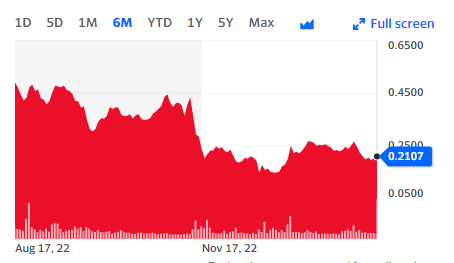
So what do the investors think? The benefit to my procrastination is that we have a few months of stock data to look at. However, Bird hasn’t yet filed their 2022 financial statements – they again have a longer timeline as a recently public company. The biggest problem facing the company is trust. Can the investors trust the financial statements now? As you can see below, there was a significant drop in November 2022, which has never been fully recovered.
 This Blog Is Basic